Summary
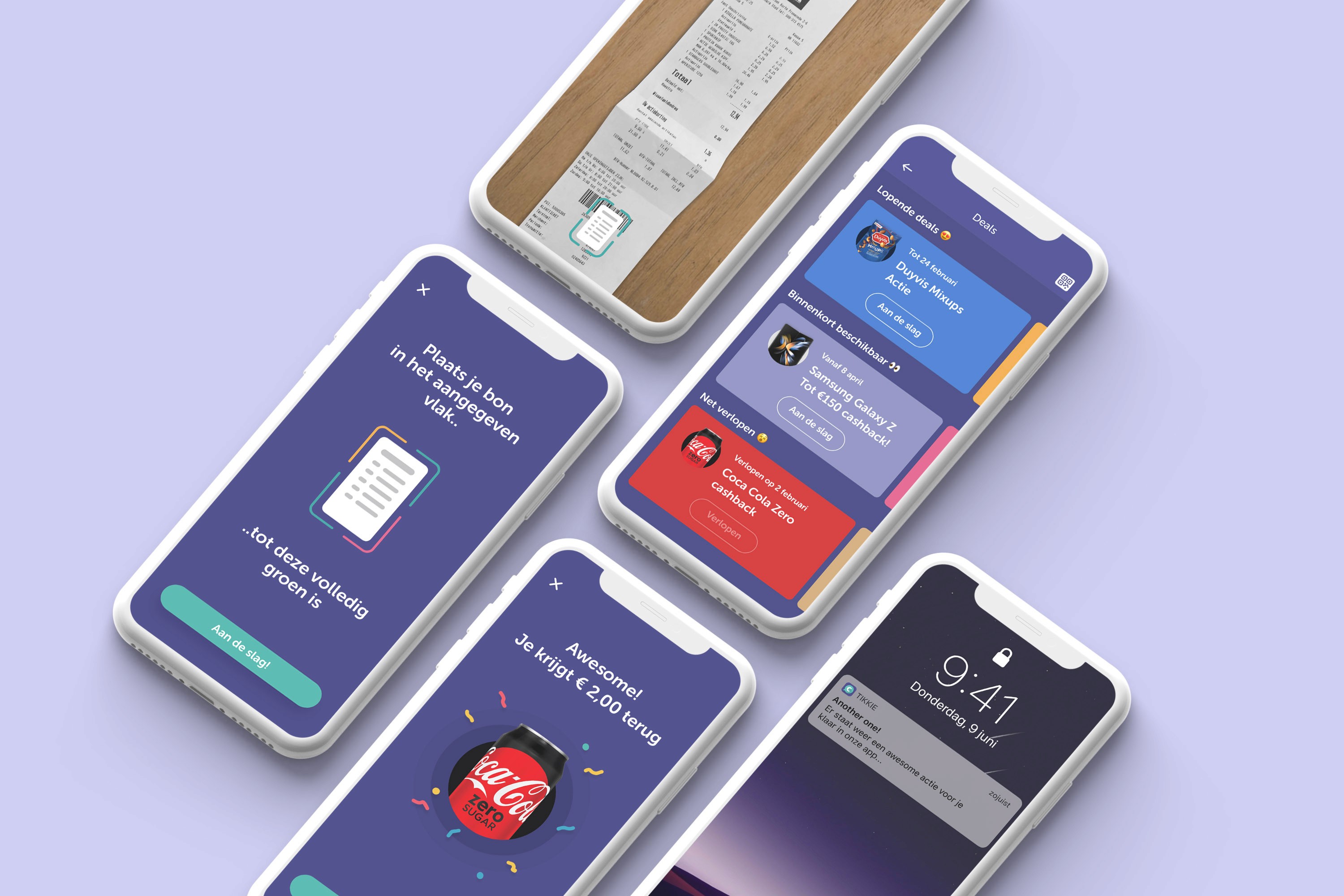
Without a doubt the biggest fintech success story in the Netherlands, with an unexpected rapid growth to roughly 8 million users. Tikkie is a mobile-first payment platform used to send and receive money. After a viral start however, arose the main challenge of not having a (solid) revenue model, as Tikkie was still dependant on the funds of its parent company (ABN AMRO bank). In the meanwhile, the userbase shifted from a mainly Gen-Z audience to a strongly diversified group of users, each with their own needs and expectations. So, how do you build a revenue model afterwards without compromising user value and without disrupting the ease of a single-purpose App? In this role, I lead the product discovery team working closely with Leadership, continuously validating propositions with experiments and customer interviews until proven to have the right problem-solution fit.
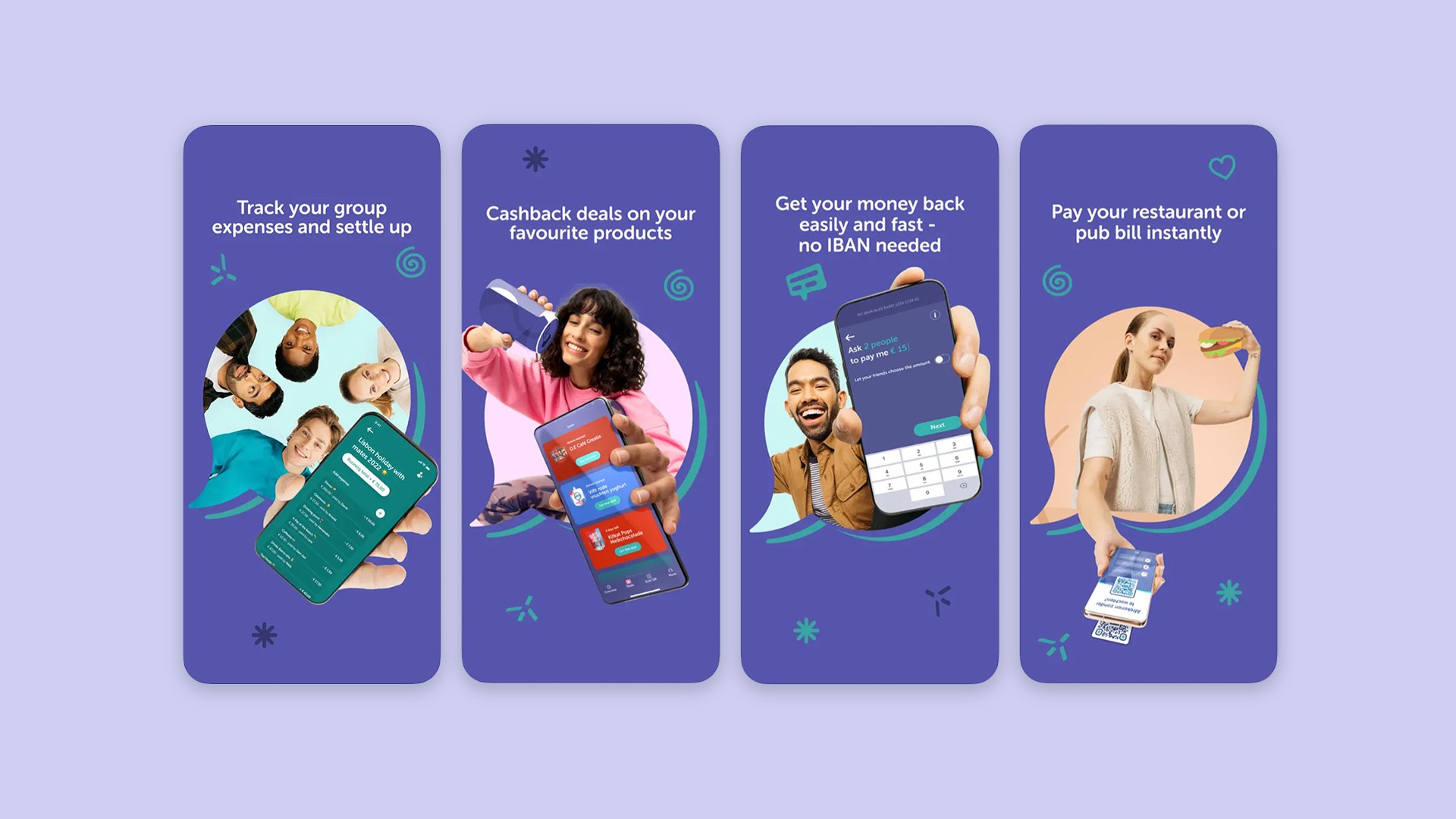
Tikkie in the Appstore
Approach
How-might-we framing sessions
Porter's Five Forces analysis
Continuous semi-structured user interviews (28 total)
Quantitative validation through surveys
Multiple design sprints
Implementation embedded in SCRUM team
Design handover
Key insights
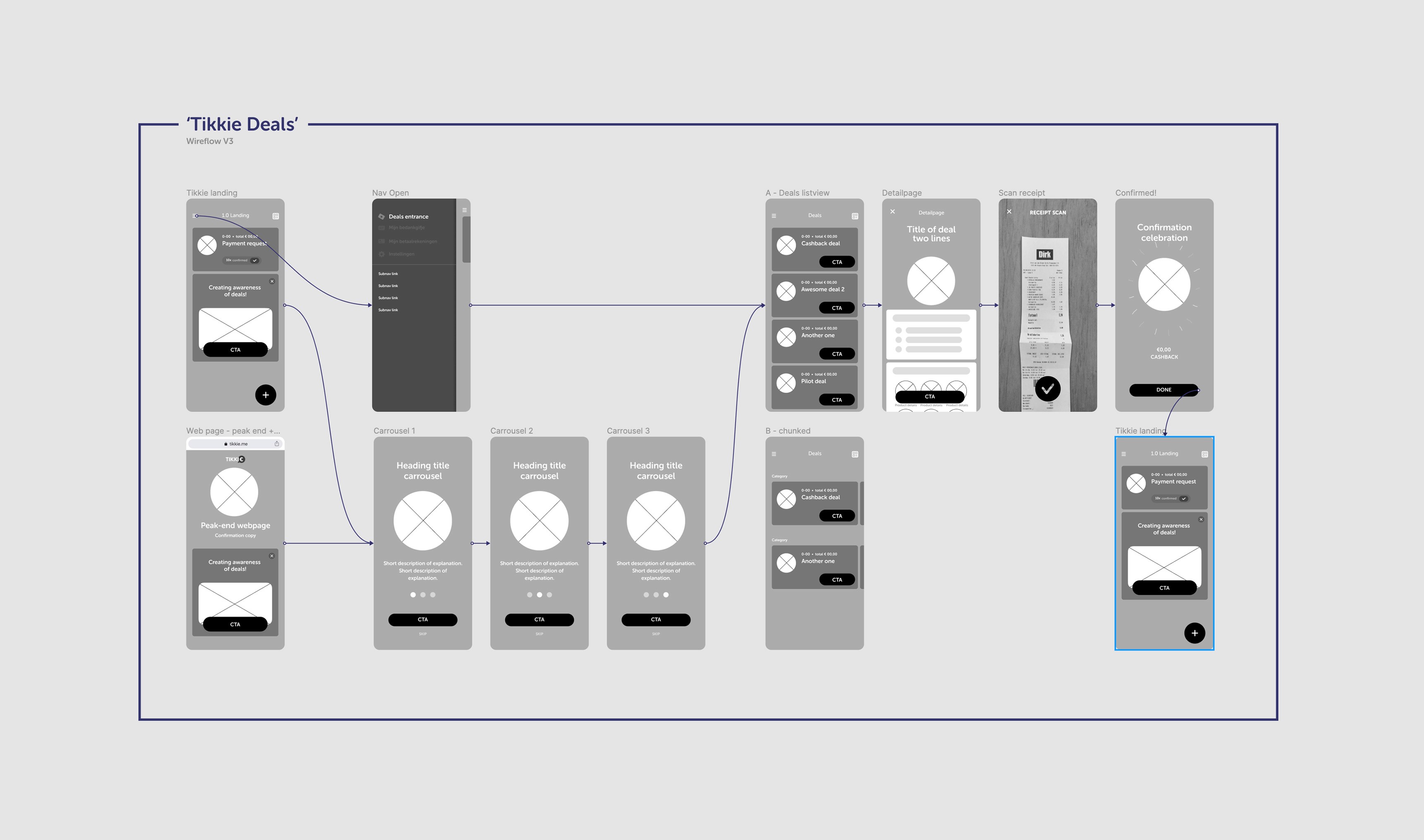
To uncover the right direction, I ran what I call a customer carousel, a recurring series of research sessions with at least 3–4 different participants every two weeks. The goal: learn fast, iterate fast, and bring sharper hypotheses back into each next round. For this proposition specifically, I conducted 28 interviews followed by a quantifying survey. The clearest signals, across both consumer and brand perspectives:
👥 Getting money back from companies is painful Cashback campaigns — regardless of brand — involve a fragmented journey of on- and offline steps, forms, and waiting. Consumers regularly give up before completing them. The promised incentive rarely feels worth the effort.
👥 Willingness to try, but not to pay Consumers enjoy the novelty of new products and the appeal of a good deal. But asking them to pay upfront to access that value — even a small amount — creates immediate friction and drops intent sharply.
👥 No single source for new deals A clear segment of consumers actively searches for early-access products and strong deals. Currently, there's no reliable, curated source for this — making it a fragmented and frustrating manual effort.
🏢 Advertising is a means, not a goal Brands are genuinely proud of strong creative campaigns, but the act of advertising itself remains a chore. This creates real openness to new, more efficient ways to reach relevant audiences.
🏢 Visibility in physical retail is a persistent challenge Across product categories, brands struggle to stand out at the point of sale. In-store attention is fragmented and hard to own.
Value proposition
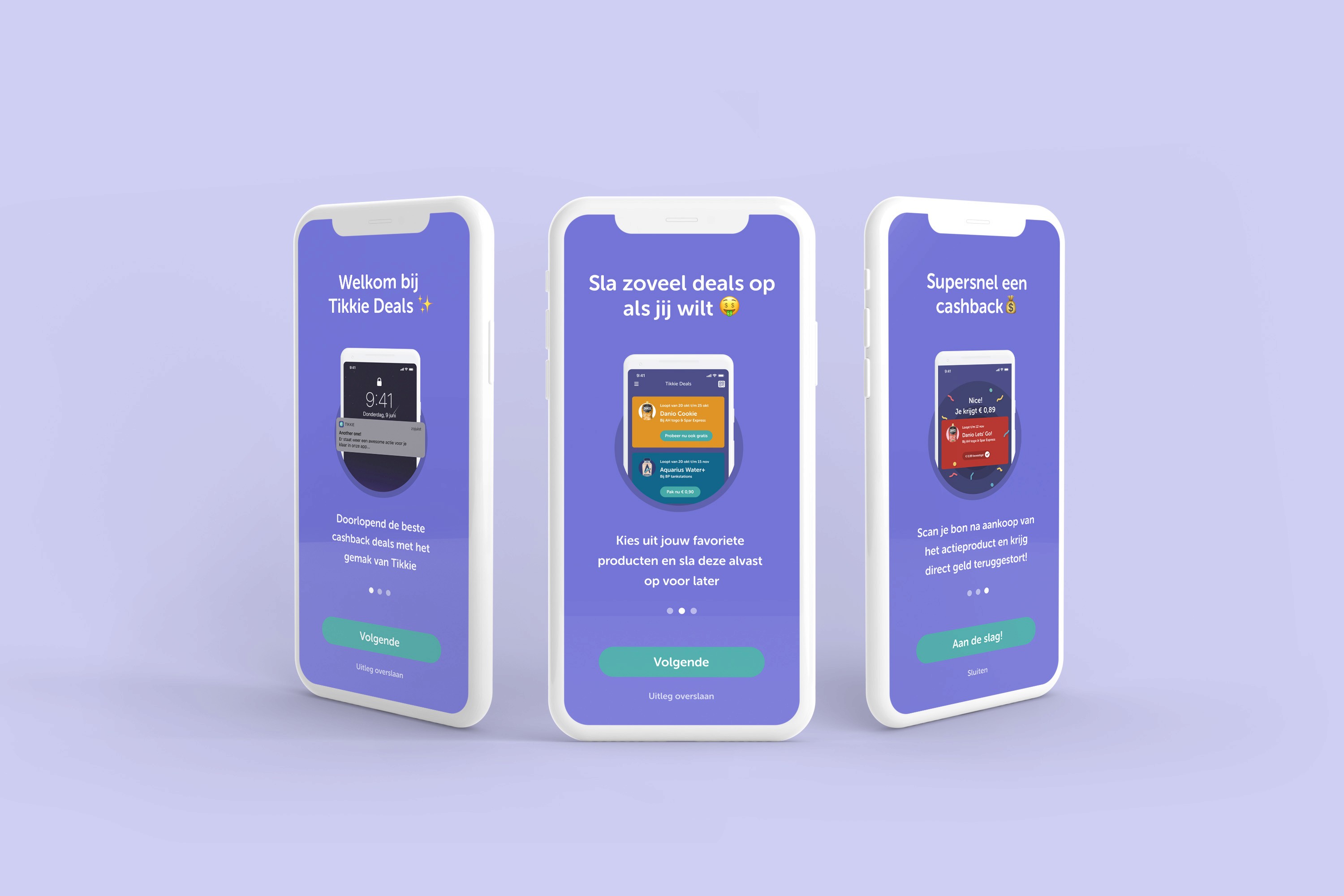
Daily cashbacks for consumers — with the simplicity Tikkie is already known for.
Despite the commercial logic of product placement, the guiding principle was non-negotiable: end-users first, brands second. We designed a system where cashback deals are always user-initiated — never pushed. The proposition creates a genuine three-way value exchange: consumers get financial rewards, brands get relevant reach and measurable engagement, and Tikkie earns a scalable revenue stream.
Guiding principles for the proposition:
Cashbacks are unconditional
Instant payout — a meaningful USP in the Dutch market
Deals are curated by a dedicated Tikkie team
No ad inventory for sale — screen real estate stays clean
End-users first, brands second
Identified risks
Absence of KYC at launch limits deal relevance and personalization potential
The mechanic is relatively easy for well-resourced competitors with comparable user bases to replicate
The current feature increment is minimal, more functionally advanced users will expect further development over time
Key results
Across 28 user interviews and a quantifying survey, 91% of participants flagged the cashback redemption experience as a critical pain point, giving us the confidence to move forward with a focused proposition. Redesigning core navigation from a hamburger menu to a bottom navigation pattern alone reduced drop-off by 22%, an early signal that even structural UX decisions directly affect retention at Tikkie's scale. In the pilot cohort, the cashback redemption rate came in 34% above the industry benchmark for traditional cashback flows, validating both the product direction and the pull-based design principle. Of the propositions explored during discovery, this was one of three advanced into the SCRUM delivery cycle and shipped to production.
+34% Cashback redemption rate
−22% Drop-off reduction
91% Problem validation rate
1 of 3 Propositions to production

